Thomson Reserve and the slower questions for home owners
A launch weekend compresses a long decision into a few days, and the questions that matter to a family take longer.
By Jessin Chua
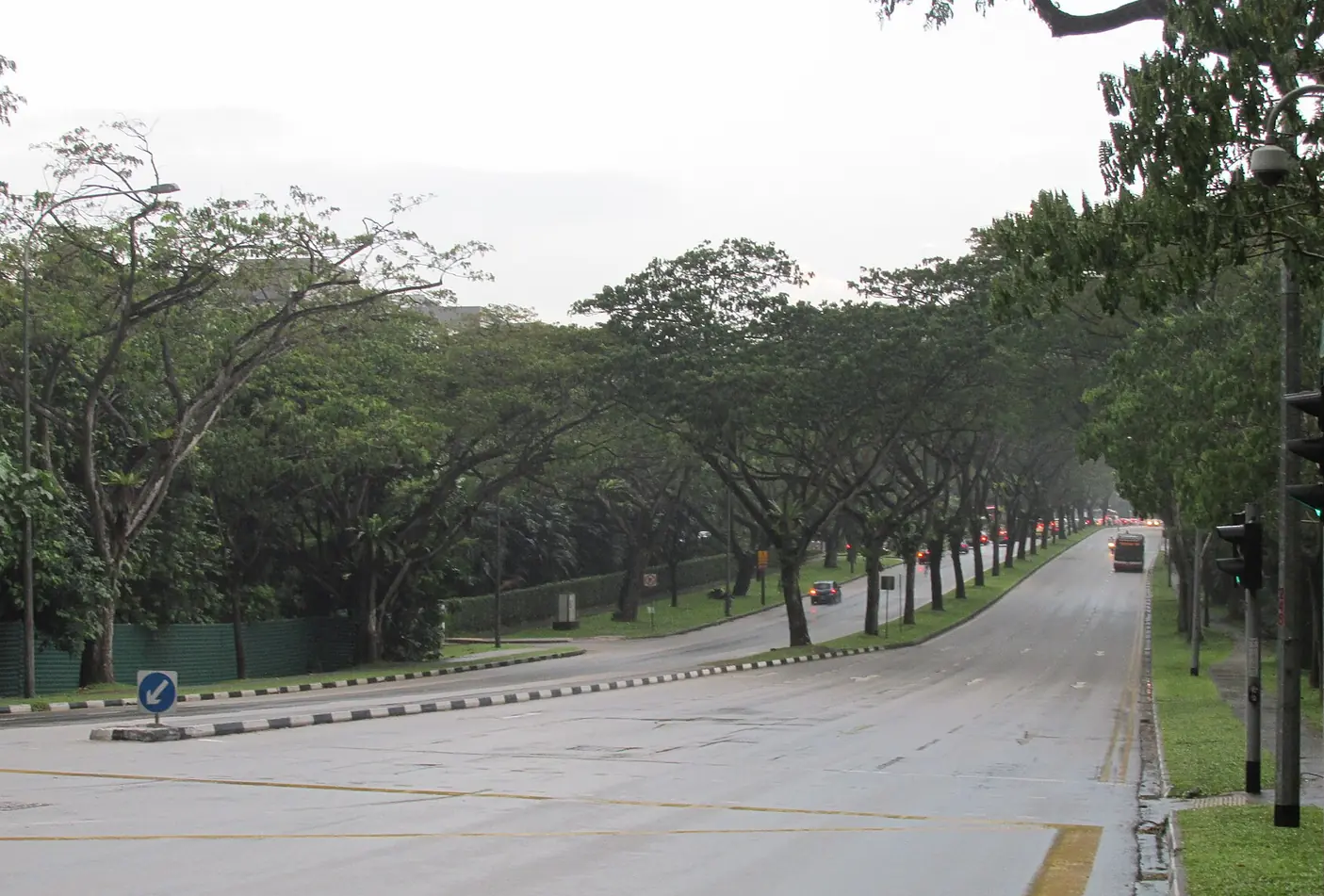
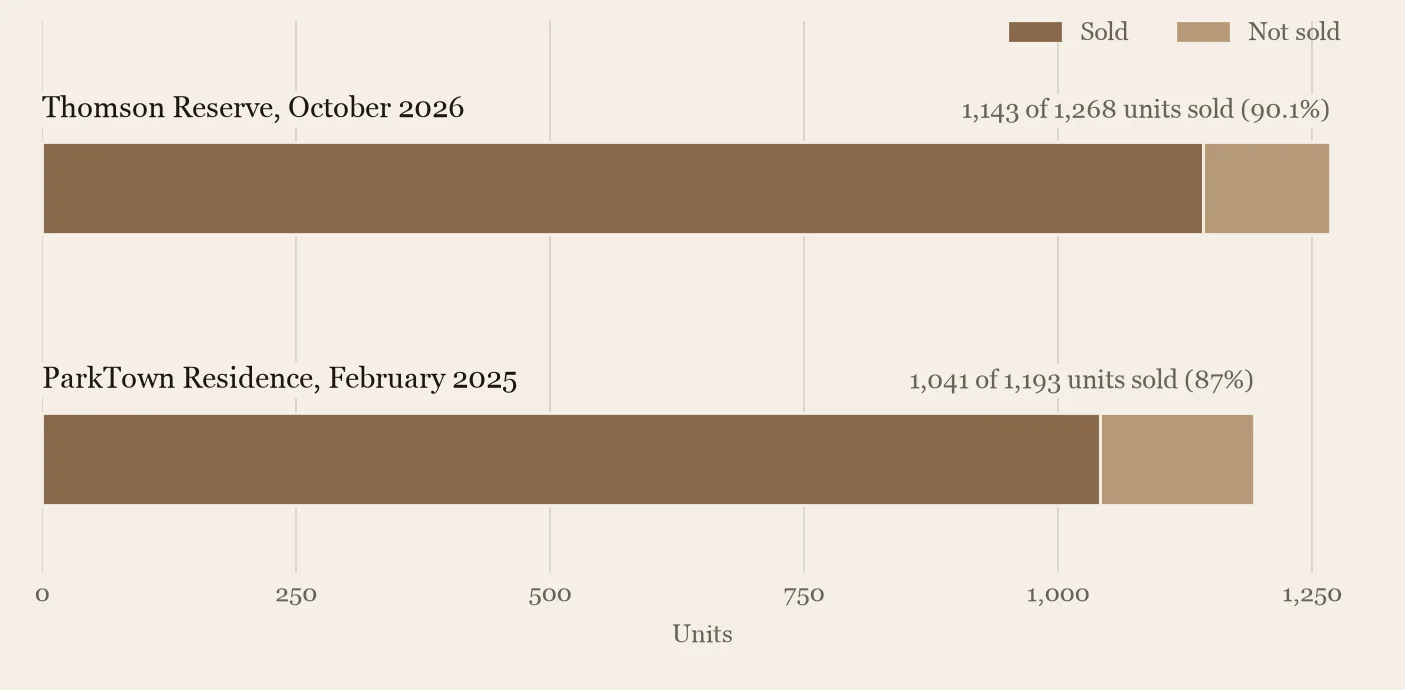
As EdgeProp Singapore reported, Thomson Reserve sold 1,143 of its 1,268 units, or 90.1%, over its VIP preview on 30 October and launch day on 31 October. The average price was $2,900 per square foot, according to a joint statement by its developers, UOL Group and CapitaLand Development. Huttons Data Analytics estimates that around 90% of buyers were owner-occupiers. The report puts buyers with private residential addresses at an estimated 70%.
A launch weekend compresses a long decision into a few days. I read this result as a fact about one project, at one price, over one weekend. It says something about demand for these homes and little about whether a move suits your family. If you feel the pull to follow, there are slower questions to answer first, beginning with what becomes of the home you already hold.
What does a 90% weekend actually tell you?
It tells you that interest was broad. The project drew 32,000 visitors over two weekends of public preview and collected more than 3,300 cheques. The comparison in the report is ParkTown Residence in Tampines North, which sold 1,041 of its 1,193 units, or 87%, in February 2025.
Kelvin Fong, the chief executive of PropNex, attributes the take-up partly to the "relatively affordable price quantum", with three-bedroom units starting from $2.503 million. He adds that the launch "provides a good sense of private housing demand heading into 2027". That is a fair reading of a market. A family is not a market. A take-up rate counts the homes sold at one project on given days. It cannot say what each buyer gave up to do so, or how the decision will sit with them in ten years.
Why would so many buyers stay so close to home?
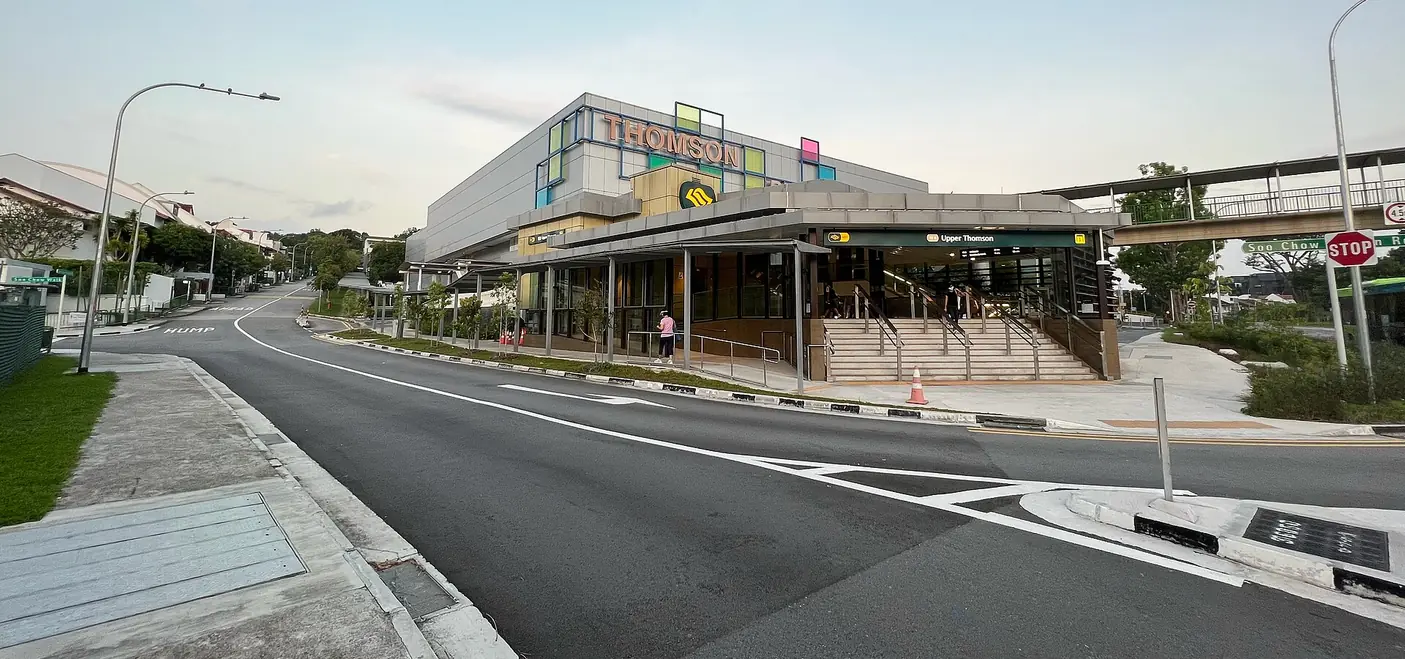
The more telling detail sits further down the report. Huttons estimates that most of the owner-occupiers live in Districts 19 and 20, and Thomson Reserve itself is in District 20, at Bright Hill Drive, off Upper Thomson Road, with a sheltered walkway to Upper Thomson MRT Station. Mark Yip, the chief executive of Huttons Asia, says 215 units were sold through multiple purchases, including those by families buying together and extended families seeking to live close to one another.
Marcus Chu, the chief executive of ERA Singapore, describes the pull this way.
"Many are also buying the opportunity to remain in a familiar neighbourhood, close to their families, schools and the amenities they have grown accustomed to."
I find that more instructive than the headline figure. Staying near a school, a parent or a familiar road is a reason that belongs to a family's life rather than to a price, and I respect it. It still deserves patience. Wanting to live near the people you love is one decision. Choosing a particular lease, a particular loan and a particular set of names on a title is another, and the second takes longer.
What becomes of the home you already hold?
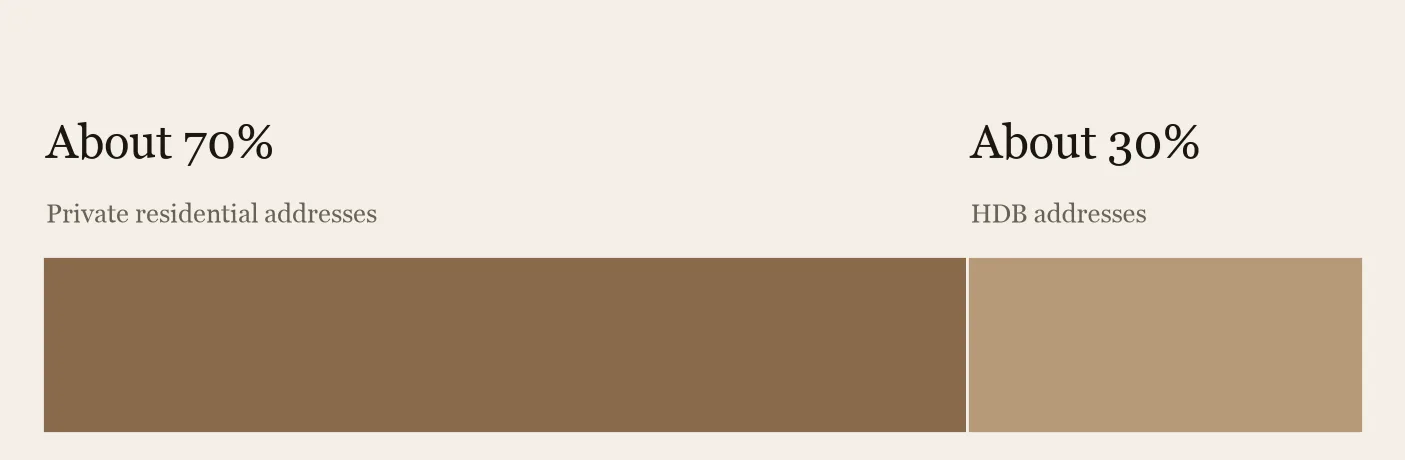
By the report's estimate, about 70% of buyers had private residential addresses and about 30% had HDB addresses. An address does not show what a buyer owns, or what they plan to do with it. For anyone who already owns a home, though, this is the question to settle first, because the rules turn on it.
A Singapore citizen pays Additional Buyer's Stamp Duty of 20% on a second residential property and 30% on a third or later one, on the higher of the price or market value, generally within 14 days of signing. On the $2.503 million at which three-bedroom prices began, 20% is about $500,000. A citizen who has contracted to sell their only home before accepting the option to purchase on the next does not pay it.
Married couples who buy first and sell later have another path. IRAS may refund the duty if the couple includes a Singapore citizen, buys in both their names only, and meets the other conditions. For a home still being built, one of these is selling the first home within six months of the Temporary Occupation Permit or Certificate of Statutory Completion, whichever is earlier, a timeline IRAS says it will not extend. Thomson Reserve expects its permit in the second half of 2030. A couple who stayed in their present home until then would have that duty out of their hands for about four years, and would then need to find a buyer within six months, in a market no one can see from here.
Two more rules sit beside these. A borrower with one outstanding housing loan faces a loan-to-value limit of 45% on the next, against 75% with none, and lower still on a long tenure or a loan running past age 65. And a home bought on or after 4 July 2025 generally carries Seller's Stamp Duty if sold within four years, from 16% in the first year down to 4% in the fourth. An HDB flat has conditions of its own, which are worth checking with HDB. None of this argues for or against a move. It is arithmetic, best done with a banker and a lawyer before a showflat visit rather than after.
What does a 99-year lease mean over the years you intend to stay?
Thomson Reserve's 99 years commenced on 14 July 2026, and the estimated date of vacant possession is 28 February 2031. More than four years of the lease will have passed before the keys are due. Against 99 that is small. A child born this year would be about 99 when the lease ends, so its length is unlikely to trouble the person who buys. It matters more to whoever comes next.
What a future buyer can do depends on what is left. The CPF rule is that the remaining lease should cover the youngest buyer using CPF to age 95. If it does not, the amount they can use is pro-rated, provided at least 20 years of lease remain, for HDB flats and private homes alike. CPF's own example has two 25-year-olds buying a flat with 65 years of lease remaining, who can use up to 90% of a $550,000 price because the lease ends when they are 90. On this lease, 65 years will remain about 34 years from now, within the working life of a child in school today. Rules can change, and I make no forecast. The point is only that a lease begins to shape who can buy a home long before it ends.
At the far end, the Singapore Land Authority says the Government's general policy is to allow leases to expire without renewal, with renewals considered case by case. This site shows another ending. Thomson View, the condominium that stood here, had a 99-year lease from 7 April 1975. It was sold en bloc for $810 million in November 2024, at the end of a 17-year journey in which its owners made five attempts. A collective sale may happen to a home. It is not a plan, and I would not build a family's future on one.
Who should hold the home, and what if life changes?
Those 215 units bought through multiple purchases raise a quieter question: whose names go on the title, and in what form. Co-owners generally hold a home as joint tenants or as tenants-in-common. Under joint tenancy, the survivor or survivors take the whole home, whether or not there is a will. Under tenancy-in-common, each owner holds a definite share, which passes under their will, or under intestacy law if there is none. Muslim estates follow their own rules. Neither form is better in the abstract, and a lawyer can say which suits your family.
The years between booking and keys are also long enough for health, work or family to change, so the papers deserve a look alongside the purchase. A will says how your estate passes on, and a grant of probate is generally still needed to carry it out. Without a will, the process is longer and more expensive. A CPF nomination is separate, because CPF savings do not form part of your estate and cannot be left by will. A Lasting Power of Attorney does a different job again. It lets people you trust make decisions for you, including on your property and affairs, if you lose mental capacity.
A trust or a company is another way to hold a home. IRAS generally applies an ABSD rate of 65% to entities and to residential property transferred to a trustee on trust, with remission available only in certain cases. That is a matter for a lawyer and a tax adviser, well before any booking.
If Thomson Reserve, or a launch after it, has caught your eye, I would begin at your own table rather than in a showflat. Write down what you own, what you owe and how long you mean to stay. Work out what the lease will look like when your children are the age you are now. Ask who would hold the home if you could not. The answers may point to a move, or to staying where you are. Either way they will be yours, and no weekend's figures can supply them.
If this touches your own home
I am glad to talk it through. Property is my side of the table, and I work with Summit Planners, who draw up wills and lasting powers of attorney around the home under their own arrangements.
Start a conversationJessin Chua, CEA R066020B · Isaac Tan, CEA R071233B · PropNex Realty Pte Ltd, CEA L3008022J
Sources
- Thomson Reserve launch sales hit over 90% or 1,143 units at average of $2,900 psf, EdgeProp Singapore, 2026-10-31
- Thomson Reserve: First mega launch in eight years at Upper Thomson, priced from $2,608 psf, EdgeProp Singapore, 2026-10-15
- UOL Group and CapitaLand Development to unveil 1,268-unit Thomson Reserve overlooking Singapore's largest nature reserve, CapitaLand, 2026-10-15
- UOL and CapitaLand to acquire Thomson View Condo for $810 mil, EdgeProp Singapore, 2024-10-26
- Additional Buyer's Stamp Duty (ABSD), Inland Revenue Authority of Singapore, Retrieved 2026-11-02
- Remission of ABSD for a married couple, Inland Revenue Authority of Singapore, Retrieved 2026-11-02
- Seller's Stamp Duty (SSD) for residential property, Inland Revenue Authority of Singapore, Retrieved 2026-11-02
- Loan Tenure and Loan-to-Value Limits, Monetary Authority of Singapore, Retrieved 2026-11-02
- How much CPF savings you can use for your home purchase, CPF Board, Retrieved 2026-11-02
- How much CPF savings can I use to buy a property if its lease does not cover the youngest buyer to age 95?, CPF Board, Retrieved 2026-11-02
- More flexibility to buy a home for life while safeguarding retirement, CPF Board, 2019-05-09
- Lease Policy, Singapore Land Authority, 2025-06-27
- Joint Tenancy vs Tenancy-in-Common and How to Change, SingaporeLegalAdvice.com, 2025-12-04
- What is probate?, MoneySense, Retrieved 2026-11-02
- Making a CPF nomination, CPF Board, Retrieved 2026-11-02
- How to secure your future with CPF nomination and LPA, CPF Board, Retrieved 2026-11-02
General information only, correct to my reading of these sources on the date above. Nothing here is financial, legal or tax advice, and none of it takes your circumstances into account. Photographs and charts in this note are credited where they appear.
Jessin Chua · PropNex Realty Pte Ltd · CEA Registration Number R066020B · CEA Licence Number L3008022J