Prime-district rents slipped in the third quarter. What should a family read into it?
The third quarter favoured the suburbs, and for a family holding a home in the prime districts, what it can earn now deserves as much attention as what it might fetch.
By Jessin Chua
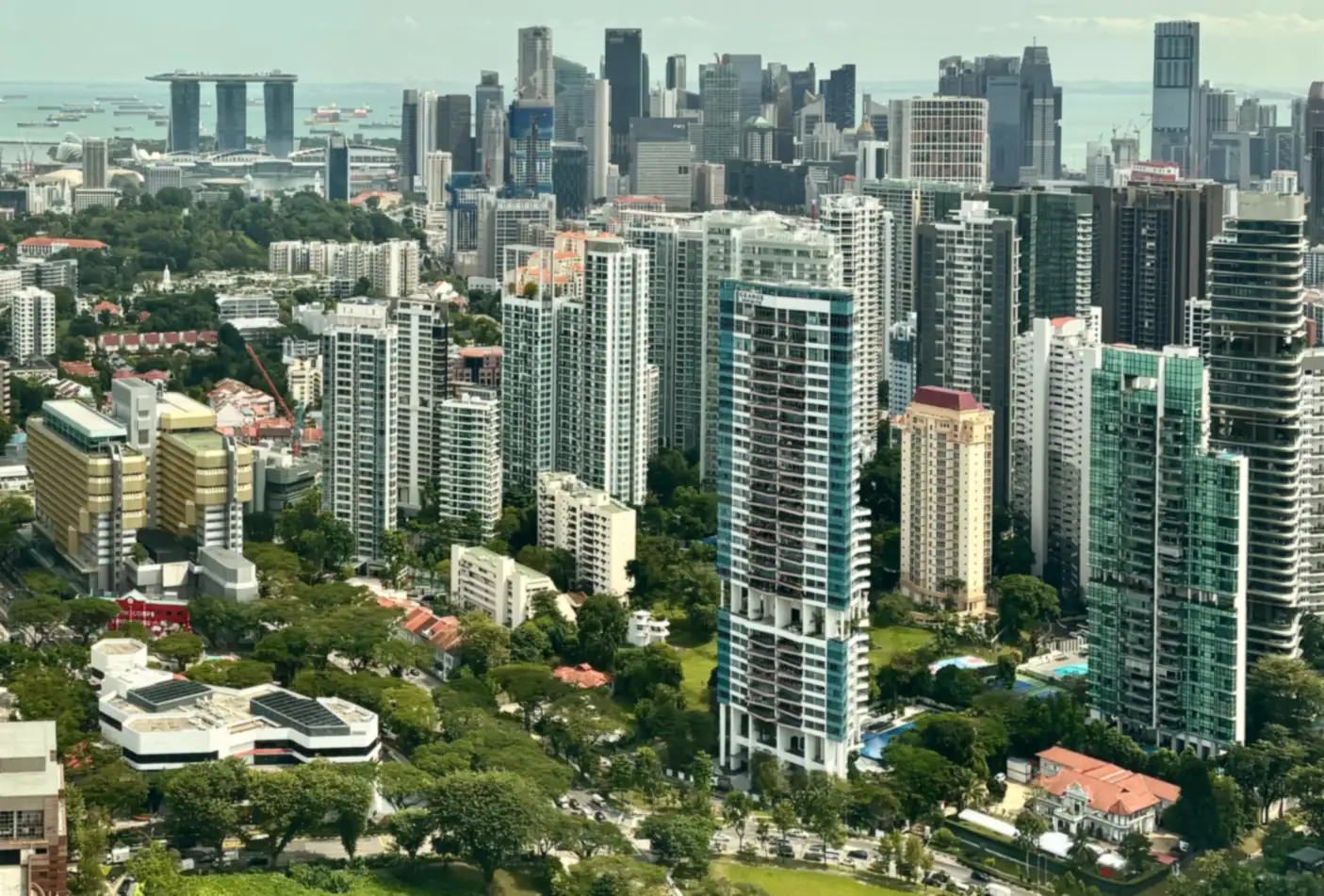
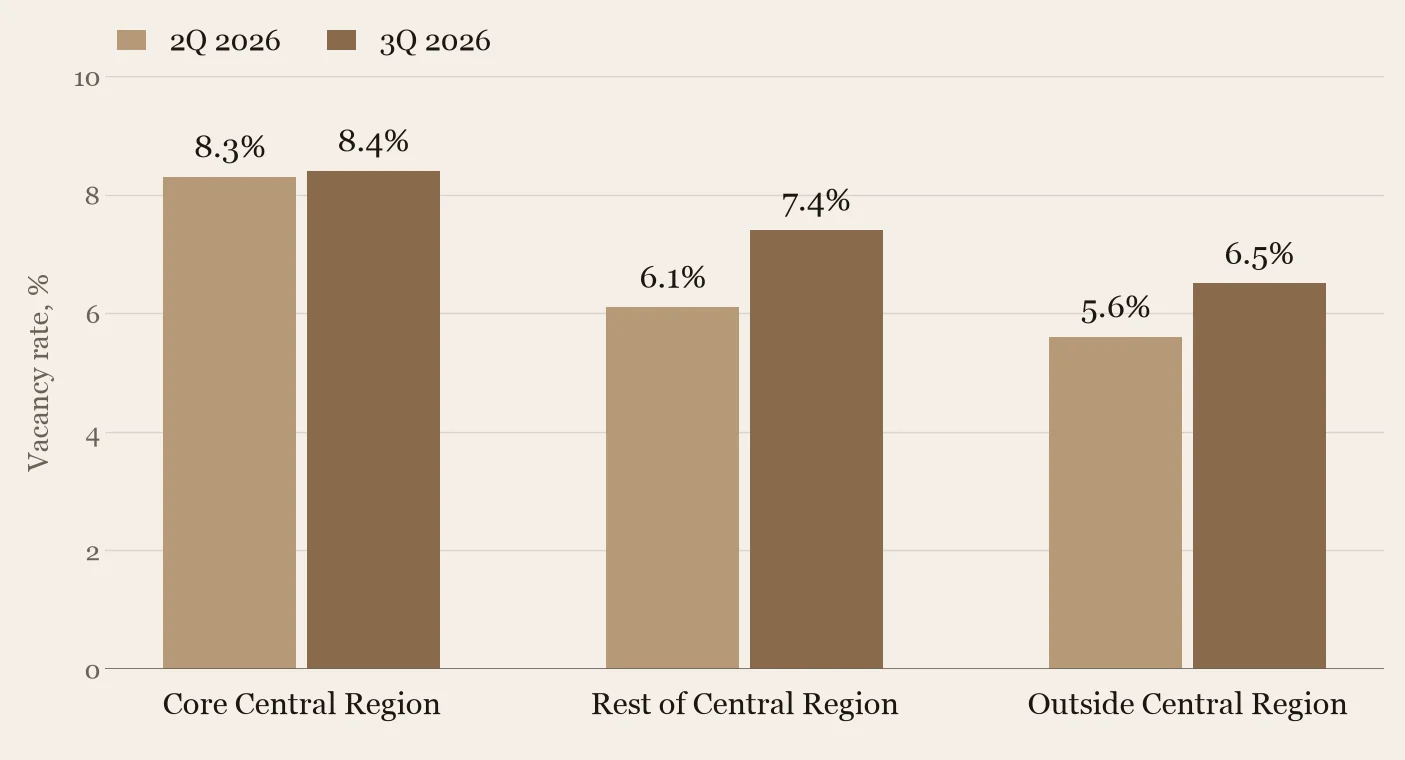
As EdgeProp reported on 23 October, private home prices in Singapore rose 1.4% in the third quarter, and rents rose 1.3%. The prime districts moved differently. In the Urban Redevelopment Authority's figures, non-landed prices in the Core Central Region edged up 0.3%, non-landed rents slipped 0.3%, and vacancy stood at 8.4%, the highest of the three regions.
These are small numbers, and I would not build a story on one quarter. They do sharpen one question. For a family holding a second home in these districts, or deciding what to do with a home a parent has moved out of, the income the home can earn deserves as much attention as the price it might fetch. That calls for a patient reading of one home, not a view of the market as a whole.
What actually moved in the prime districts?
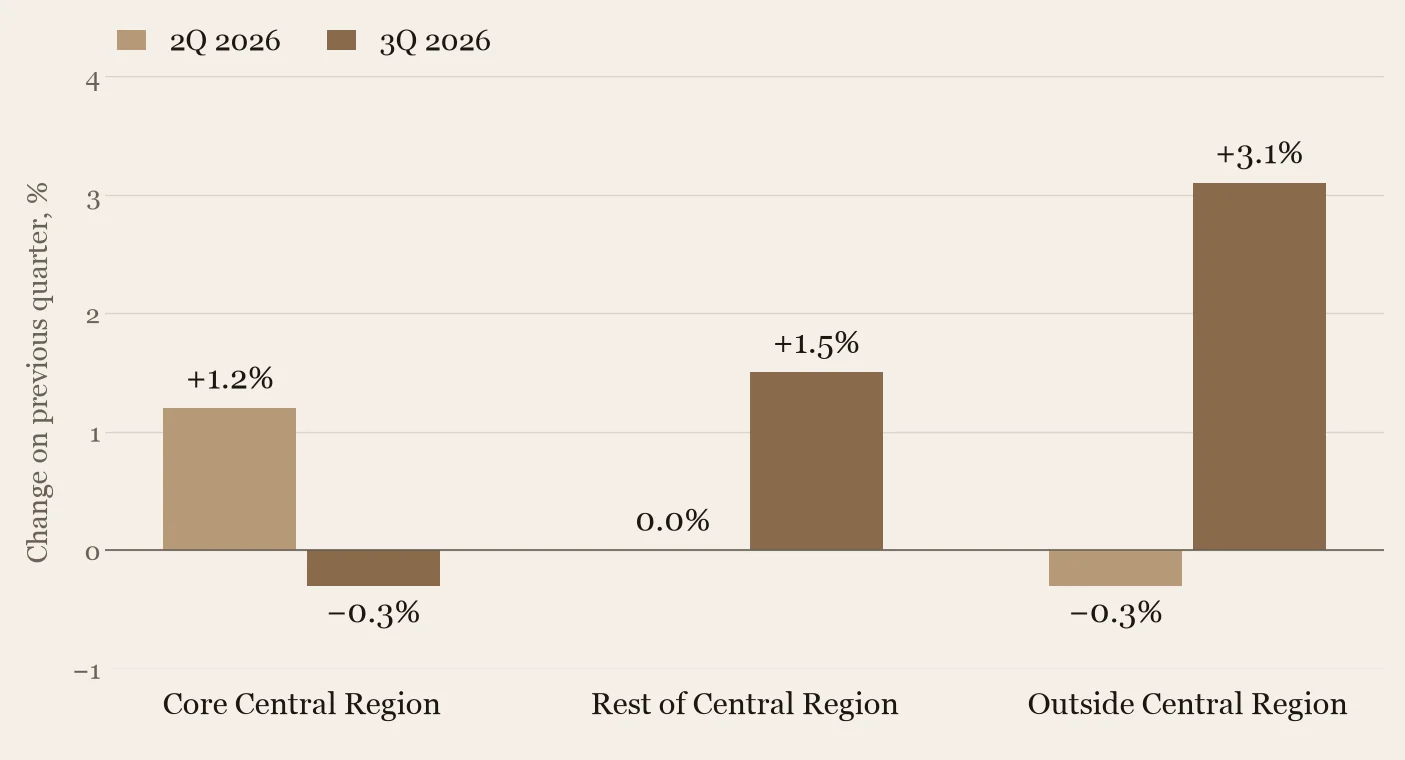
The Core Central Region covers Postal Districts 9, 10 and 11, the Downtown Core and Sentosa. Non-landed rents there fell 0.3% in the third quarter, after rising 1.2% in the second. The fall is smaller than the rise before it. URA's rental index for the region went from 152.9 to 152.4, which is a small step back. One quarter cannot say whether it is a change of direction.
The other two regions went the other way. Rents rose 3.1% in the Outside Central Region, the suburbs, and 1.5% in the Rest of Central Region, the city fringe. Prices also rose most in the suburbs: up 2.3%, against no change on the city fringe and a rise of 0.3% in the prime districts, after 1.8% the quarter before.
These regional figures cover non-landed homes. Landed rents, which URA's release gives for the island as a whole, rose 2.1%. So a family with a house in District 10 should read the regional number with care, as it does not describe their home.
URA's release gives no reason for the prime-district dip, and one reading cannot supply one. What I take from it is modest. In this quarter, the prime districts were the only region where non-landed rents fell.
Does an 8.4% vacancy rate explain the dip?
Not on its own. Vacancy in the Core Central Region barely moved, from 8.3% to 8.4%. The larger shifts came elsewhere: from 6.1% to 7.4% in the Rest of Central Region, and from 5.6% to 6.5% in the Outside Central Region.
Islandwide, vacancy rose to 7.2% from 6.4%. URA's account of this is simple arithmetic. The stock of completed private homes, leaving out executive condominiums, grew by 3,491 units in the quarter, while occupied homes fell by 305. A vacancy rate rises when homes are finished faster than they fill.
So the suburbs saw rents and vacancy climb together, while the prime districts saw vacancy hold and rents slip. A regional rate is a poor guide to any one home. It counts a new apartment waiting for its first occupant and an older home between tenants in the same way.
The more useful remark may be about the tenant. Christine Sun, chief researcher and strategist at Realion (OrangeTee & ETC) Group, described islandwide occupancy as "healthy" at 92.8%, and said in EdgeProp's report that landlords "may need to adapt to changing tenant demographics, income levels and housing preferences". For a home in the prime districts, I would want to know who is renting nearby today, and not assume it is the same tenant as a decade ago.
An index describes a region. A family holds one home, and the decision has to be made at that scale.
What does a home earn, once the cost of holding it is counted?
This is where I would spend the most time, because an index cannot do it for you.
Begin with the rent this home can achieve. IRAS points owners to the rentals URA publishes for private residential developments, which brings the question down from a region to a development.
Then count what the home costs to hold. Property tax is charged whether a home is lived in, let or empty. It is worked out on annual value, which IRAS defines as the estimated gross annual rent if the home were let, and which it reviews every year against comparable homes. Owner-occupier rates run from 0% to 32%. A home the owner does not live in generally moves to non-owner-occupier rates, which run from 12% to 36%.
Two details matter for a home a parent has left. An owner on owner-occupier rates must tell IRAS within 15 days of ceasing to occupy the home, so the tax position can change with the move itself, before any tenant arrives. And there is no relief for a vacant home. If it is let instead, the rent may be subject to income tax.
This is why I would look at empty months before the headline. One month without a tenant costs more over a year than a 0.3% fall in rent. A home that is easy to let, and kept in a condition a tenant will stay in, may matter more to a family's income than anything in this quarter's figures.
Let it, sell it, or hold it for a while?
I do not think a quarter like this one answers that. It can help separate the steps that are easy to undo from the steps that are not.
A lease can be undone, but only with time. URA requires a minimum stay of three consecutive months in private homes, so a shorter let is not a way to keep a home flexible. Once a tenant is in place, the home is tied to the terms of the lease. If a parent may wish to return, or a child may need the home, that belongs in the decision from the start.
A sale is harder to undo. A Singapore Citizen buying a second residential property generally pays Additional Buyer's Stamp Duty at 20%, with a refund possible only in certain cases. A family that sells and later wishes to hold a second home again may not return to the same position.
Waiting has its own cost, which is the sum of the last section, and its own uncertainty. URA says more than 32,000 private homes, including executive condominiums, could be made available for sale over the next one to two years, within about 57,200 expected to complete in the years ahead. Cushman & Wakefield expects private rents to grow by up to 3.0% in 2026, citing a constrained supply pipeline and steady demand from international students. Christine Sun cautioned that interest rates could continue to rise in the months ahead, and URA calls the macroeconomic outlook highly uncertain. These are views, and none of them is specific to the prime districts.
When URA next reports, I would look at two things: whether the Core Central Region rent index steadies or slips again, and whether vacancy in the other two regions keeps climbing as more homes complete. Two readings would say more than one.
Who decides, if a parent no longer can?
For a home a parent has moved out of, there is a question that comes before all of this, which is who has the authority to decide. If the home is the parent's and the parent is able to decide, the decision remains theirs, and the family's part is to listen. If that changes, much depends on what was put in place beforehand.
A Lasting Power of Attorney (LPA) lets a person appoint someone they trust to act for them if they lose mental capacity one day, in personal welfare, in property and affairs, or in both. The Office of the Public Guardian notes that a donee may be able to transfer an interest in a home on the donor's behalf if granted property and affairs powers. Without an LPA in place, loved ones may need to apply for a Deputyship order, and sparing them that difficulty is part of why one is made.
How the home is held matters too. As MoneySense explains, under joint tenancy the surviving owner takes the whole home, regardless of whether the deceased owner left a will. Under tenancy-in-common, each owner's share is separate and the probate process applies. One can be converted into the other, with fees and charges. CPF savings sit outside the estate altogether, which is what a CPF nomination is for.
These are general points, and they do not describe any one family's position. Which arrangement fits yours is a question for a lawyer, and it is an easier conversation while everyone can still take part in it.
If I were reading this quarter for one home, I would write down three things on a single page: the rent it can achieve in its own development, what it costs to hold for a year, and who in the family is able to decide. A movement of 0.3% asks for no reaction. It is a fair moment to look closely at one home, on its own terms.
If this touches your own home
I am glad to talk it through. Property is my side of the table, and I work with Summit Planners, who draw up wills and lasting powers of attorney around the home under their own arrangements.
Start a conversationJessin Chua, CEA R066020B · Isaac Tan, CEA R071233B · PropNex Realty Pte Ltd, CEA L3008022J
Sources
- Release of 3rd Quarter 2026 real estate statistics, Urban Redevelopment Authority, 23 October 2026
- Private home prices up 1.4% while rents gain 1.3% in 3Q2026, speeding up slightly, EdgeProp Singapore, 23 October 2026
- Annex A-2: Comparison of rental index for 2nd Quarter 2026 and 3rd Quarter 2026, Urban Redevelopment Authority, 23 October 2026
- Comments on URA Real Estate Statistics for Q3 2026, Cushman & Wakefield, 26 October 2026
- Annual Value, Inland Revenue Authority of Singapore, Retrieved 2 November 2026
- Property Tax Rates, Inland Revenue Authority of Singapore, Retrieved 2 November 2026
- Moving out of my property, Inland Revenue Authority of Singapore, Retrieved 2 November 2026
- Renting out my property, Inland Revenue Authority of Singapore, Retrieved 2 November 2026
- Additional Buyer's Stamp Duty (ABSD), Inland Revenue Authority of Singapore, Retrieved 2 November 2026
- Renting Property, Urban Redevelopment Authority, Retrieved 2 November 2026
- What is a Lasting Power of Attorney, Office of the Public Guardian, Ministry of Social and Family Development, Retrieved 2 November 2026
- Deciding how to transfer your estate, MoneySense, Retrieved 2 November 2026
General information only, correct to my reading of these sources on the date above. Nothing here is financial, legal or tax advice, and none of it takes your circumstances into account. Photographs and charts in this note are credited where they appear.
Jessin Chua · PropNex Realty Pte Ltd · CEA Registration Number R066020B · CEA Licence Number L3008022J